
-
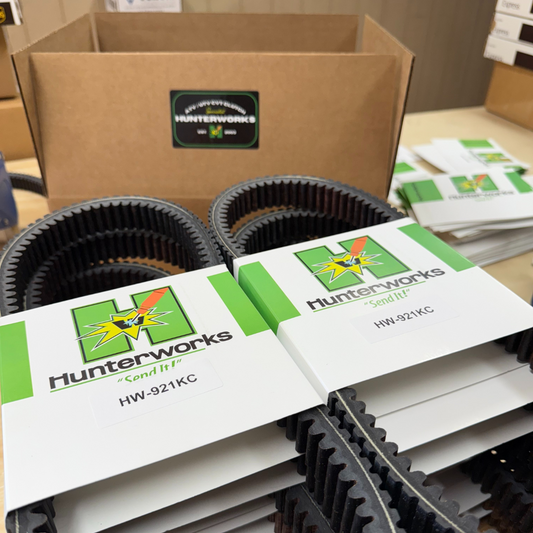
Hunterworks CVT Drive Belt for 2014-2023 Polaris RZR XP 1000 (All Models) XP4, HL, Trail, Sport, Ultimate, Premium
Regular price $169.00Regular priceUnit price per -
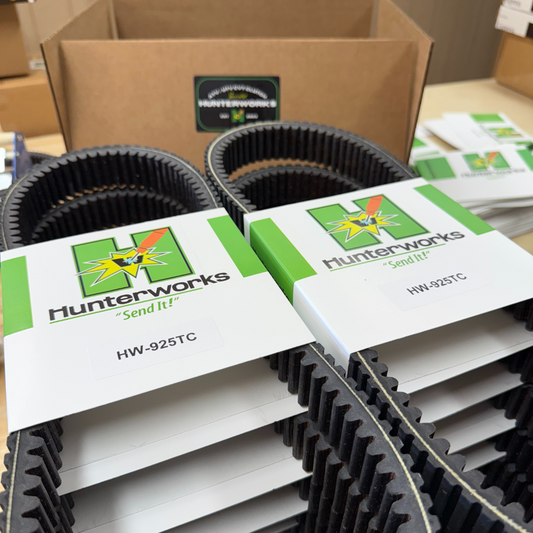
Hunterworks CVT Drive Belt for 2016-2026 Polaris RZR Turbo/RZR Pro/RZR Turbo R/RZR Turbo S
Regular price From $169.00Regular priceUnit price per -
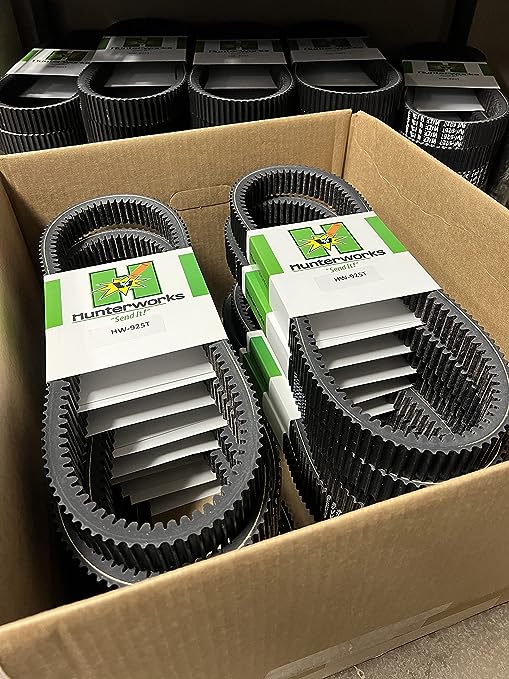
Hunterworks 2020-2026 Polaris Pro XP Turbo RZR Belt
Regular price From $169.00Regular priceUnit price per



Frequently Asked Questions:
When should I replace my ATV or UTV drive belt?
Replace the belt at the first sign of visible wear, glazing, or edge fraying, and always carry a spare before long rides in remote terrain. A belt breaks at the worst possible time when it's been running past its service point. Catching wear early keeps the engine and surrounding drivetrain components from absorbing the damage a sudden failure causes.
How long do CVT belts typically last?
Belt life varies based on riding habits, terrain, load, and how well the drivetrain is maintained. Unlike V-belts in passenger cars driving steady loads, CVT belts in off-road vehicles absorb constant, variable stress with every ride. Proper engine warm-up before hard riding extends belt life considerably.
What happens if a belt is installed incorrectly?
A belt seated wrong will wear unevenly from the first ride and can fail long before its expected service life. Incorrect installation puts uneven stress on both sides of the CVT, reduces power transfer efficiency, and increases heat buildup in the drivetrain. Always verify seating before the first ride after replacement.
What are signs of a worn or failing belt?
Glazing on the belt surface, visible cracks or fraying along the edges, slippage under hard acceleration, and reduced power delivery from the engine are all reliable indicators. If the belt squeals or shudders during engagement, that's a clear sign replacement is due.
Can a heavy-duty belt handle oversized tires and loads?
Yes, when the drivetrain is properly set up for the added load. Oversized tires add rotational mass that increases stress on the belt with every acceleration cycle. A heavy-duty replacement belt handles that stress better than a stock unit, but if the drivetrain hasn't been recalibrated for the added load, even a quality belt will see shortened life.